Fossil gastropod from ~25 million years old lake sediments of South China
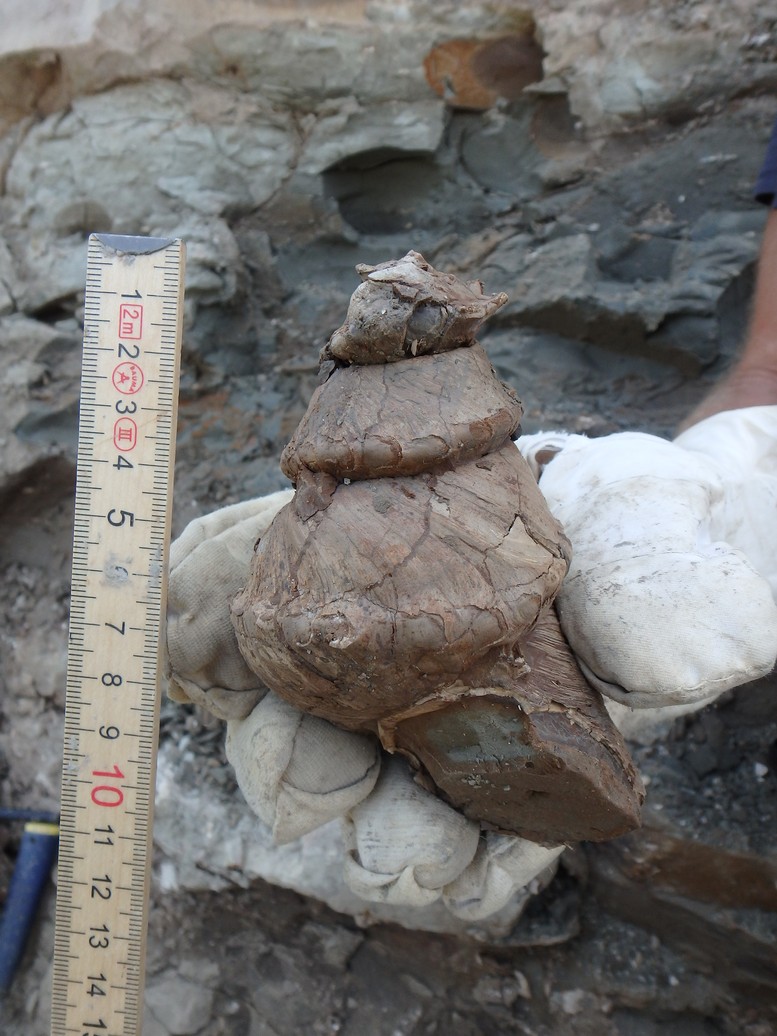
Data shows that the Asian monsoon already existed in the late Oligocene and was characterized by frequent and intense monsoonal rainfall.
Liebe Besuchende des Münsteraner Museums, aufgrund von Baumaßnahmen kann es zurzeit zu Beeinträchtigungen kommen. Wir bitten um Ihr Verständnis.
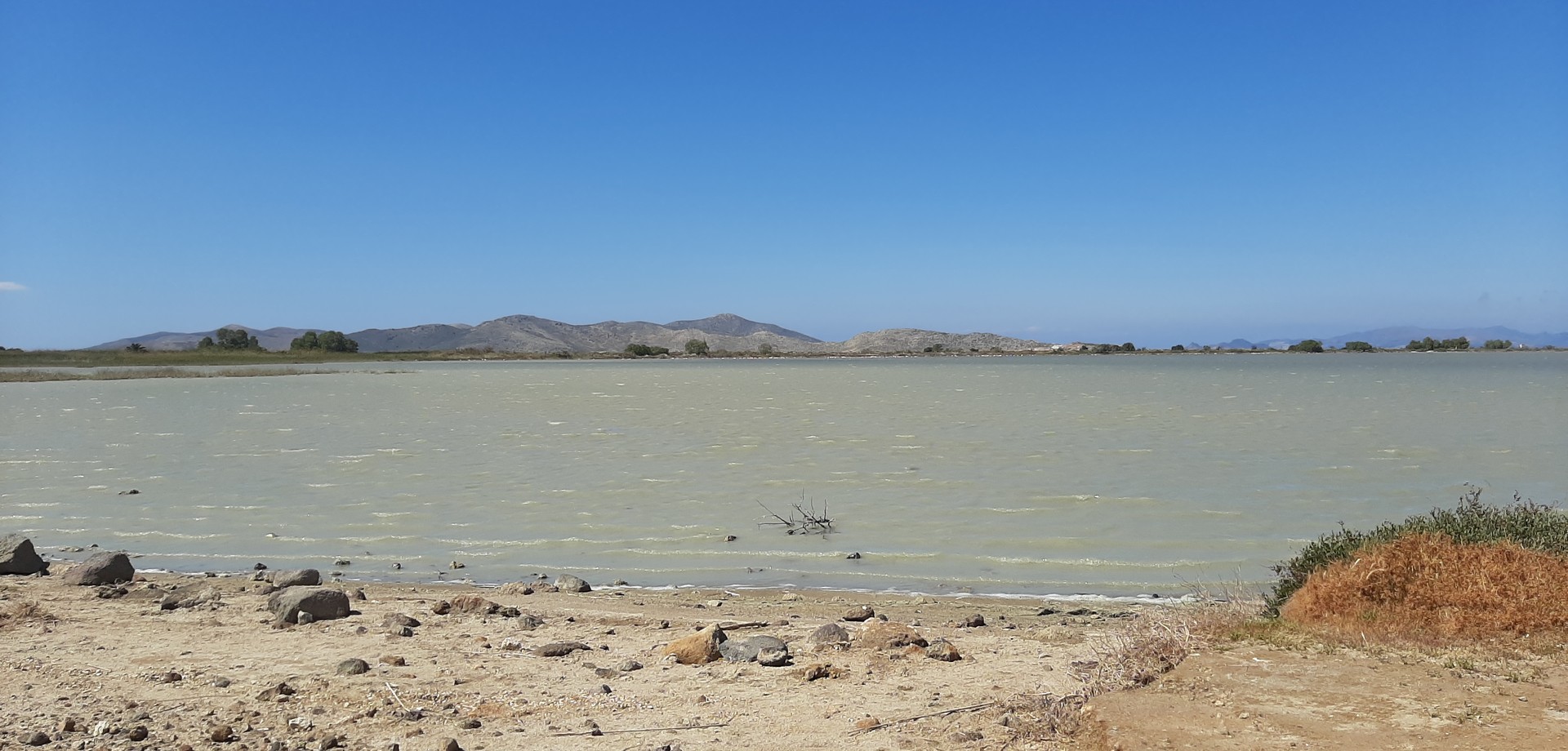
Salt Lake, Kos, Greece (c) Hethke, 2022
What do lake organisms reveal about climate change during greenhouse and icehouse world scenarios?
This fundamental question represents the key aspect of my general research interest that addresses the effect of environmental and climate change on lacustrine communities during the past 165 million years. Lakes and wetlands are biodiversity hotspots that are severely threatened by modern global warming and associated shifts in lake surface temperatures. According to the International Union for Conservation of Nature, freshwater species are going extinct more rapidly than terrestrial or marine species.
Palaeolake environments witnessed major re-organizations during the past 165 million years and were affected by environmental and climate change following the late Middle Jurassic aridification, the mid-Cretaceous Hothouse, the Oligocene early Icehouse world, and the Pliocene–Pleistocene climate cooling.
I study these crucial phases in Earth’s history as (reverse) analogues of possible future global change. I believe that a thorough understanding of taxonomy, animal growth strategies, biomineralization and habitat requirements is vital for the palaeoenvironmental and palaeoclimate interpretation of fossil data.
Together with my working group, I have described 27 crustacean species, successfully extracted n-alkane biomarker from Mesozoic lake deposits, and reconstructed atmospheric circulation systems using Oligocene and early Pleistocene gastropod fossils. Thus, my research follows a multidisciplinary approach that will, over the coming years, explore innovative ways to achieving the required precision for sub-seasonal, even macro-weather, climate reconstructions and to provide insights that have the potential to unravel the evolutionary history of lake ecosystems.
Methods
Selection of current projects
(1) Unravelling Middle Jurassic to Late Cretaceous lacustrine faunal turnover in NE China (Principal Investigator; DFG HE 7531/1)
(2) Establishing viviparid gastropods as Cenozoic continental environmental archive; with case studies on late Oligocene SE-Asian initial icehouse weather (Project Member; DFG RI 809/39)
(3) Ein grüner Korridor zwischen Namib-Wüste und Kalahari? Ein phylogeographischer Blick auf das Klima des südwestlichen Afrikas während des Letztglazialen Maximums (Project Member; DFG RI 551145135)
Contact: Dr. Manja Hethke
Data shows that the Asian monsoon already existed in the late Oligocene and was characterized by frequent and intense monsoonal rainfall.
Updaten sie ihren Browser um diese Webseite richtig betrachten zu können.