Dear visitors to the Münster Museum, please be aware that there may be some disruption at present due to building works. Thank you for your understanding.
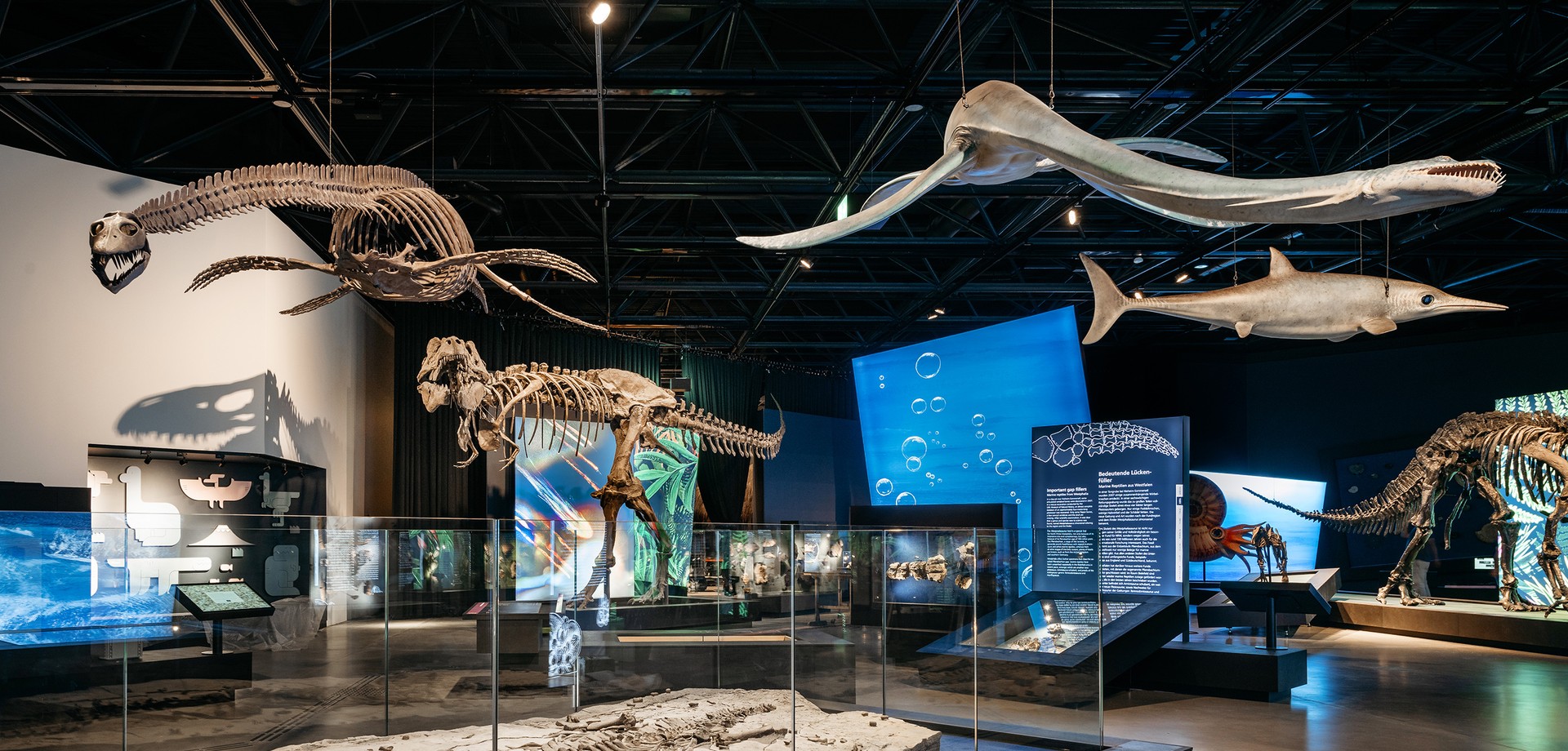
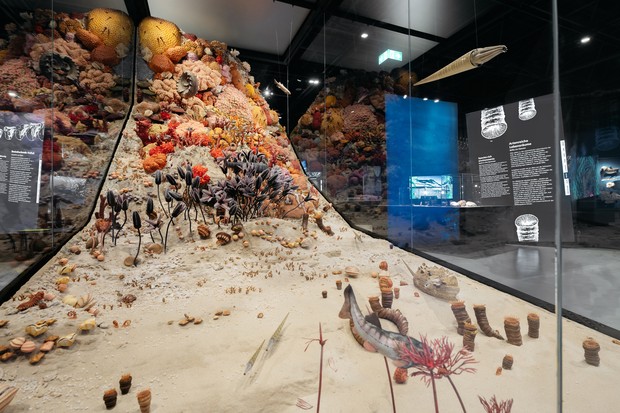
A glimpse into the exhibition ‘About Life among Dinosaurs and Giant Lycopsids’.
Photo: LWL/Steinweg
About Life among Dinosaurs and Giant Lycopsids
Sonderausstellung | ab 10.07.2026
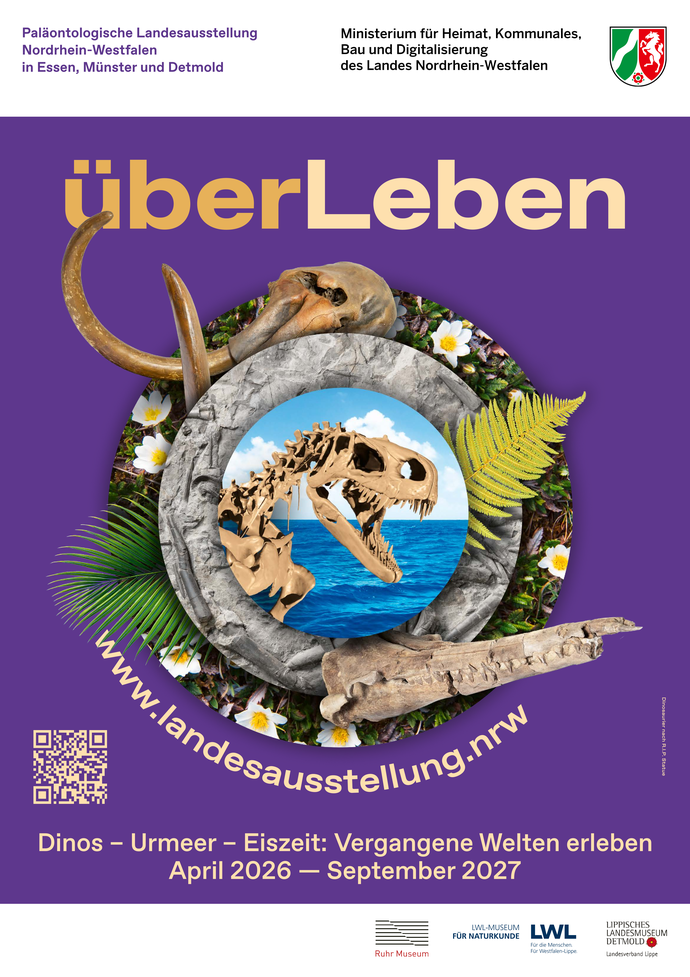
Central Europe’s largest predatory dinosaur, marine reptiles, giant trees and tiny mammals – all have been found as fossils in North Rhine-Westphalia and can be seen in the exhibition ‘About Life among Dinosaurs and Giant Lycopsids’.
Giants, mysteries and forgotten worlds: hidden beneath layers of time and stone lie traces of a reality that began long before the advent of humankind – including here in North Rhine-Westphalia. Fossils preserve moments from a distant past and continue to raise new questions to this day. It is precisely these prehistoric treasures and spectacular fossil finds that North Rhine-Westphalia will be showcasing in 2026 with a state-wide palaeontological exhibition entitled ‘überLeben’. The state-wide palaeontological exhibition is being organised on the initiative of the Ministry for Home Affairs, Local Government, Construction and Digitalisation.
Traces of extinct creatures can be found throughout North Rhine-Westphalia – the oldest of which are around 485 million years old. Alongside native dinosaurs, there is evidence of early mammals, the oldest plesiosaur, the oldest fully preserved flying insects and the world’s largest ammonite. Exotic habitats such as the Devonian reefs of the Rhenish Slate Mountains, the Carboniferous coal swamp forests of the Ruhr region, or the shallow seas of the Jurassic Wiehen Mountains and the Cretaceous Münsterland offer insights into a breathtaking diversity. A wide variety of multimedia reconstructions bring this diverse life and its environment to life.
Westphalia is dinosaur territory
Dinosaurs, enormous marine reptiles and the world’s largest ammonite. We are delighted to be able to display original, world-class fossils in this national exhibition.
Prof. Dr. Jan Ole Kriegs, Museum Director
Switch to simple language.
Activate audio support.
A video will open up presenting the text in sign language.
State-wide palaeontological exhibition North Rhine-Westphalia
'About Life among Dinosaurs and Giant Lycopsids' is the second of three exhibitions forming part of the Paläontologische Landesausstellung Nordrhein-Westfalen– initiated and funded by the Ministerium für Heimat, Kommunales, Bau und Digitalisierung des Landes Nordrhein-Westfalen. The other venues are the Ruhr Museum in Essen and the Lippische Landesmuseum in Detmold (from 26 September). Each exhibition focuses on a specific geological epoch – but the central theme is always ‘survival’. The exhibitions explore both survival across the various geological eras and the fascinating biodiversity of the plants, animals and, later, humans that lived during each period.
Switch to simple language.
Activate audio support.
A video will open up presenting the text in sign language.
Highlights of the exhibition in Münster
Wiehenvenator
Switch to simple language.
Activate audio support.
A video will open up presenting the text in sign language.
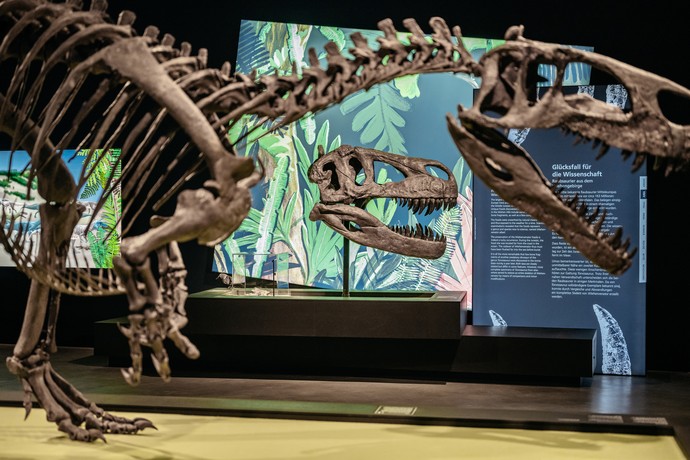
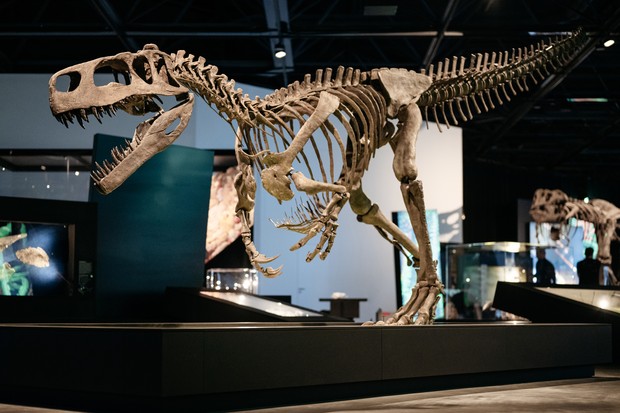
163 million years ago, the Wiehenvenator albati lived in North Rhine-Westphalia. It was one of the largest predatory dinosaurs known to have lived in Europe and its remains were discovered in the Wiehen Mountains – a true Westphalian dinosaur. It is one of many special exhibits on display at the LWL-Museum in Münster.
Information about the image
Skeletal reconstruction of Wiehenvenator albati
Photo: LWL/Steinweg
Palaeo-aquarium
Switch to simple language.
Activate audio support.
A video will open up presenting the text in sign language.
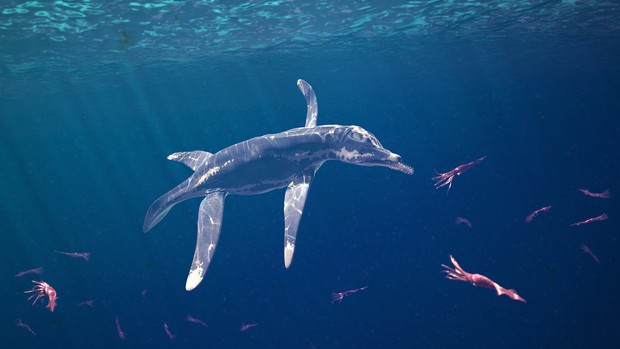
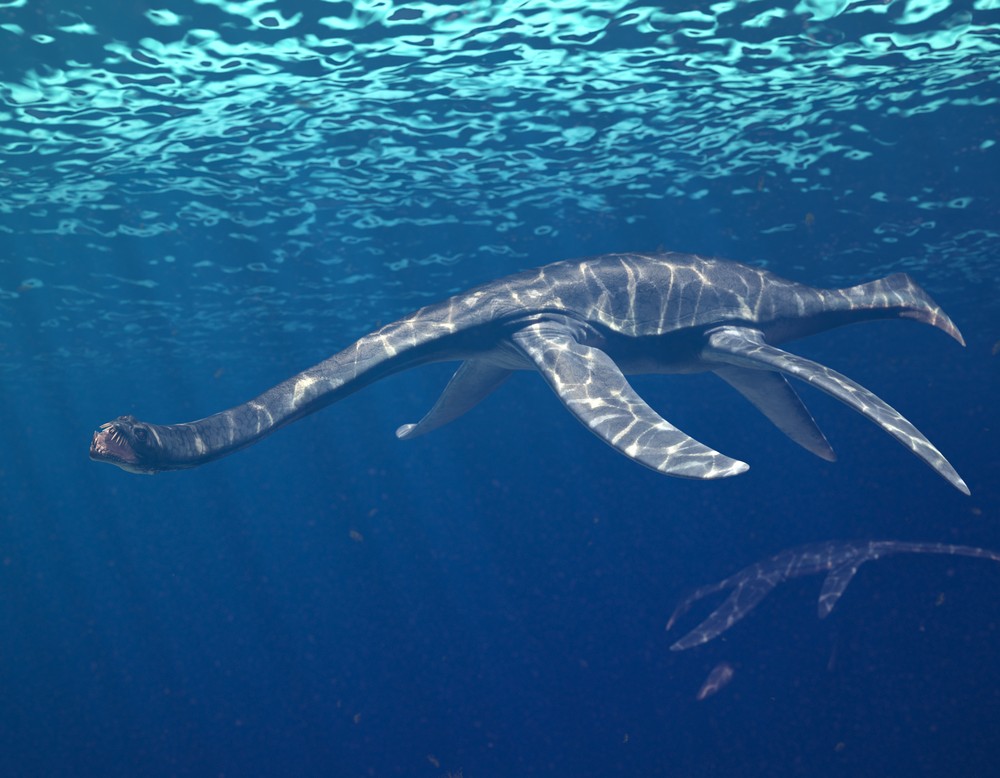
The palaeo-aquarium digitally brings to life a life-size underwater world and animals from various geological eras, bringing visitors ‘face to face’ with extinct marine creatures such as plesiosaurs, marine crocodiles and the largest bony fish in history. The digital, immersive aquarium is a large-scale projection measuring 13 by 4 metres.
Information about the image
Peloneustes on the hunt.
Graphic: Die Inforgrafen.
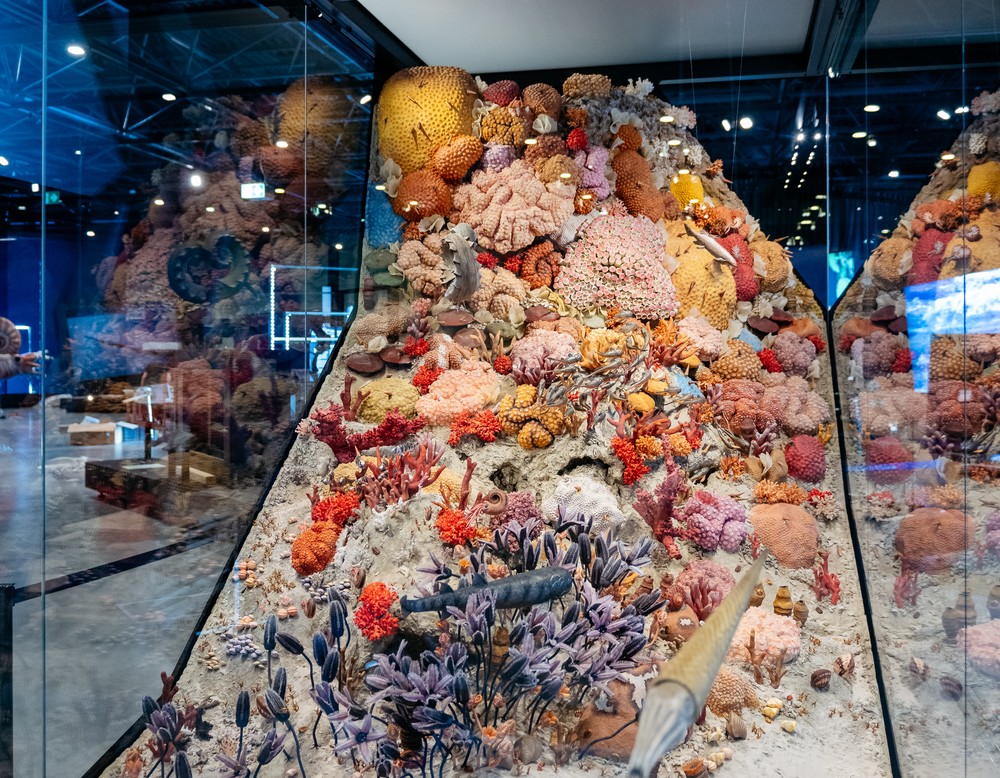
Devonian Reef
Switch to simple language.
Activate audio support.
A video will open up presenting the text in sign language.
The reef diorama, a colourful hidden-object scene comprising over 1,400 individual pieces, offers insights into the underwater world of the Devonian period (approximately 420 to 359 million years ago). During the Devonian period, todays North Rhine-Westphalia lay beneath a tropical shallow sea on the southern edge of a large continent. Here, vast reefs formed, built up mainly from sponges and corals. Living amongst them were crinoids, bivalves, brachiopods, snails, cephalopods and early fish.
Information about the image
The ecosystem of a Devonian reef.
Photo: LWL/Steinweg
Original fossils and lifelike reconstructions
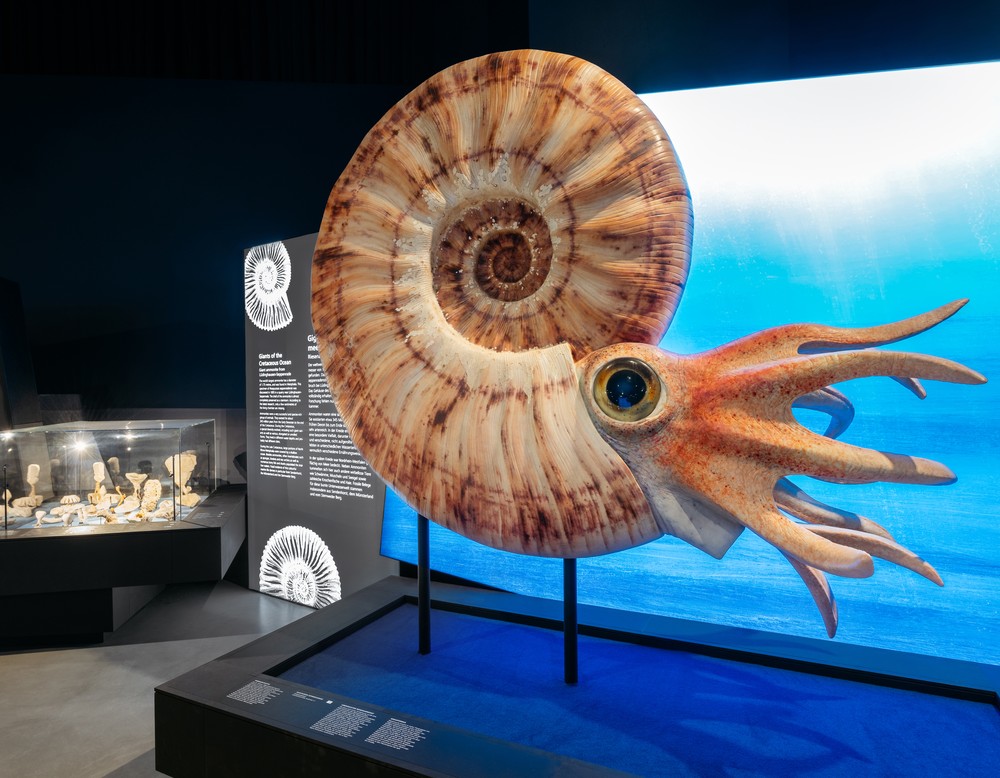
A wall of ammonites also draws the eye to finds from the area around Münster. The centrepiece of this exhibition area is ‘Parapuzosia seppenradensis’ from Lüdinghausen-Seppenrade (Coesfeld district) – the world’s largest known giant ammonite. The original fossil, which weighs several tonnes, cannot currently be displayed due to building work in the old museum foyer. Instead, a spectacular life-size model brings the find to life.
Switch to simple language.
Activate audio support.
A video will open up presenting the text in sign language.
Accessibility
The exhibition is designed to be accessible and to promote inclusive learning. There is a tactile floor guidance system and a tactile orientation map. Eleven stations feature tactile objects to touch, tactile graphics, Braille and raised lettering. These stations can be found at the start of the exhibition via the tactile map.
Switch to simple language.
Activate audio support.
A video will open up presenting the text in sign language.
A digital tour of the exhibition
Rallye app
Switch to simple language.
Activate audio support.
A video will open up presenting the text in sign language.
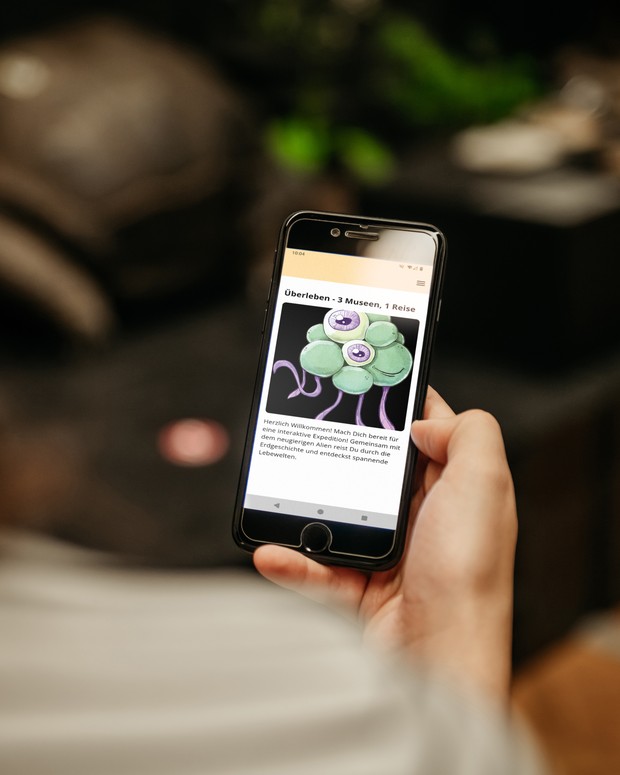
»About Life - 3 musuems 1 journey«
Dinosaurs, prehistoric whales and mammoths – different periods in the Earth’s history, showcased in three museums:
About Life among Dinosaurs and Giant Lycopsids – LWL-Museum für Naturkunde Münster (09.07.2026 – 05.09.2027)
About Life - Whales in Prehistoric Oceans – Lippisches Landesmuseum Detmold (26.09.2026 – 04.04.2027)
About Life in the Ice Age – Ruhr Museum, Essen (20.4.2026 – 10.1.2027)
Together with the curious alien Gidluk, the journey – whether in the museum itself or from the comfort of your own home – takes you through some of the most fascinating ecosystems that have ever existed in North Rhine-Westphalia.
The tours invite you to tackle creative and exciting challenges and discover the world of palaeontology in a completely new way. Through play, you can experience how life emerges, constantly changes, adapts and survives.
A video will open up presenting the text in sign language.
Reconstruction of the giant ammonite Parapuzosia seppenradensis.
Switch to simple language.
Activate audio support.
A video will open up presenting the text in sign language.
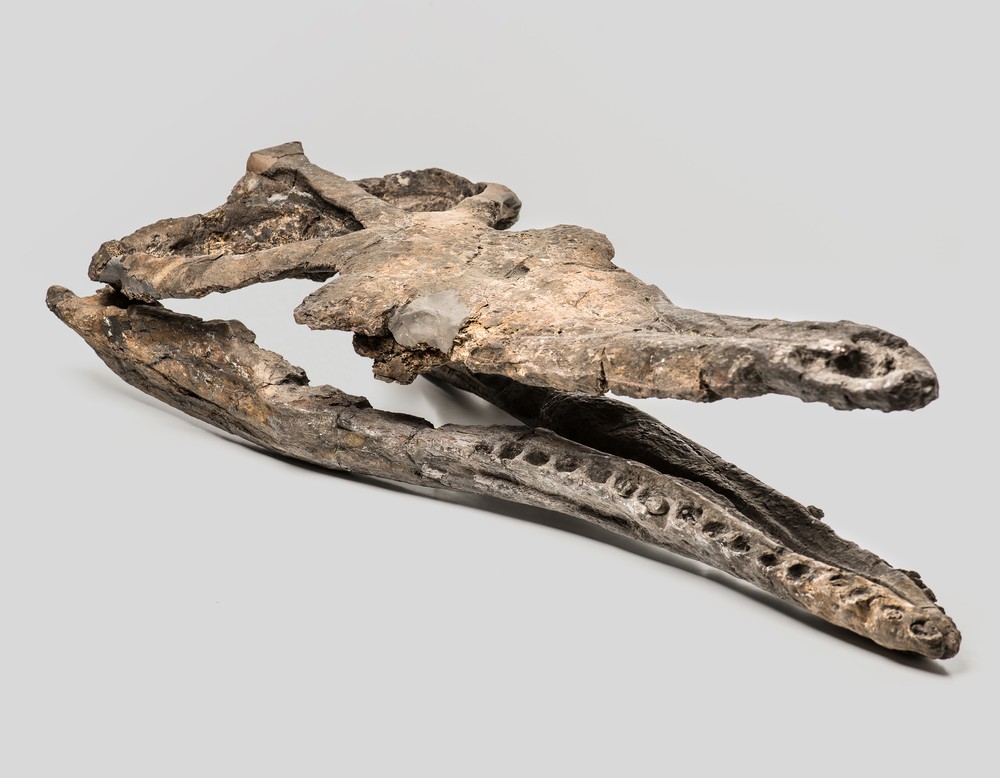
Skull of Metriorhynchus.
Switch to simple language.
Activate audio support.
A video will open up presenting the text in sign language.
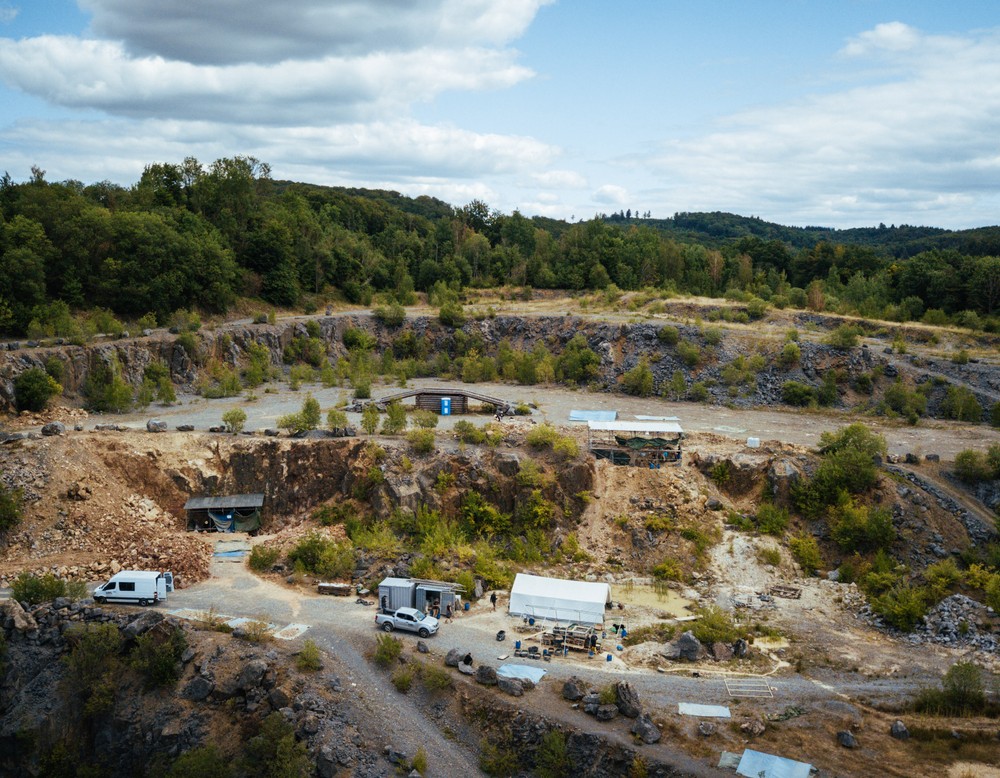
Excavation site in Balve.
Switch to simple language.
Activate audio support.
A video will open up presenting the text in sign language.
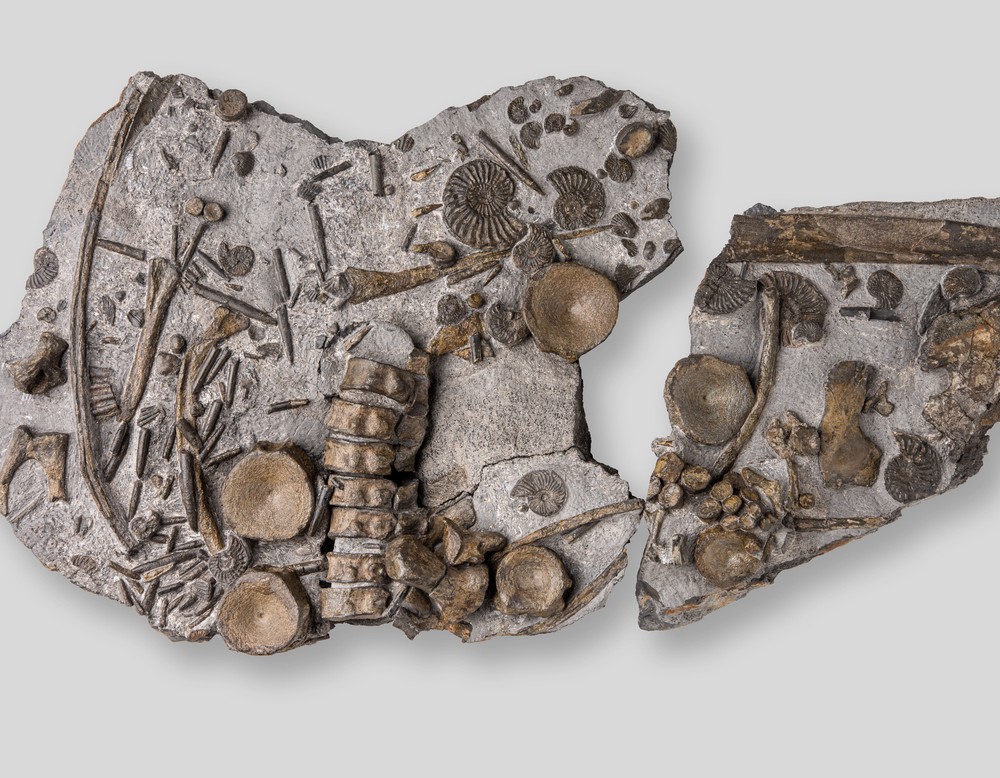
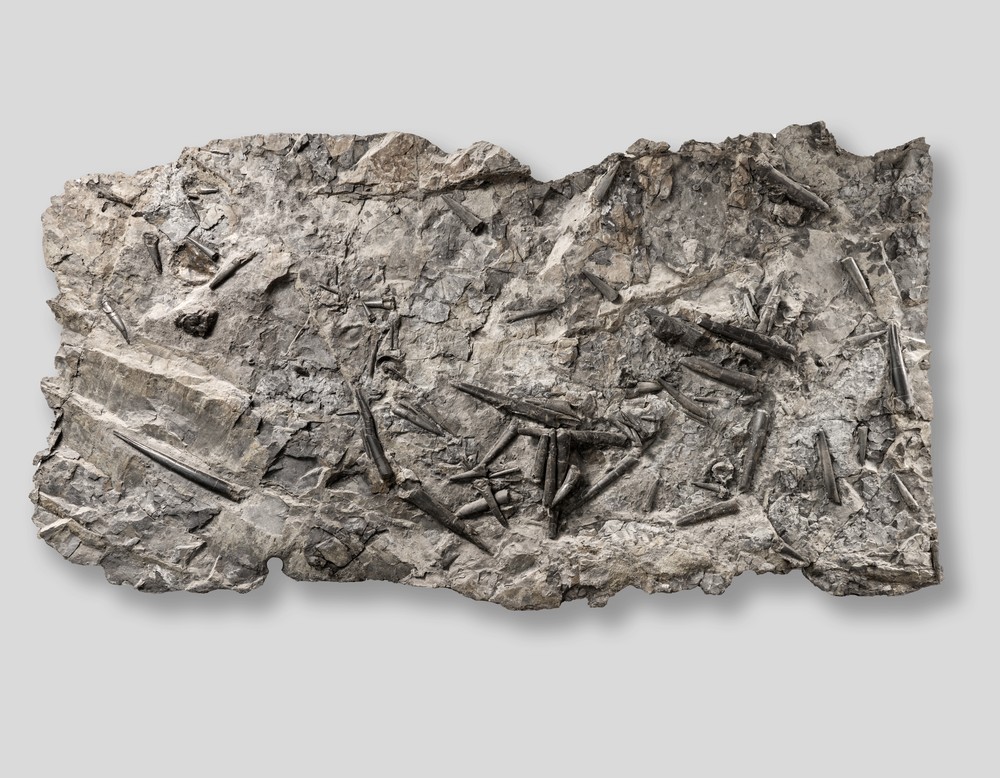
Ammonites and the bones of the Ichthyosaur.
Switch to simple language.
Activate audio support.
A video will open up presenting the text in sign language.
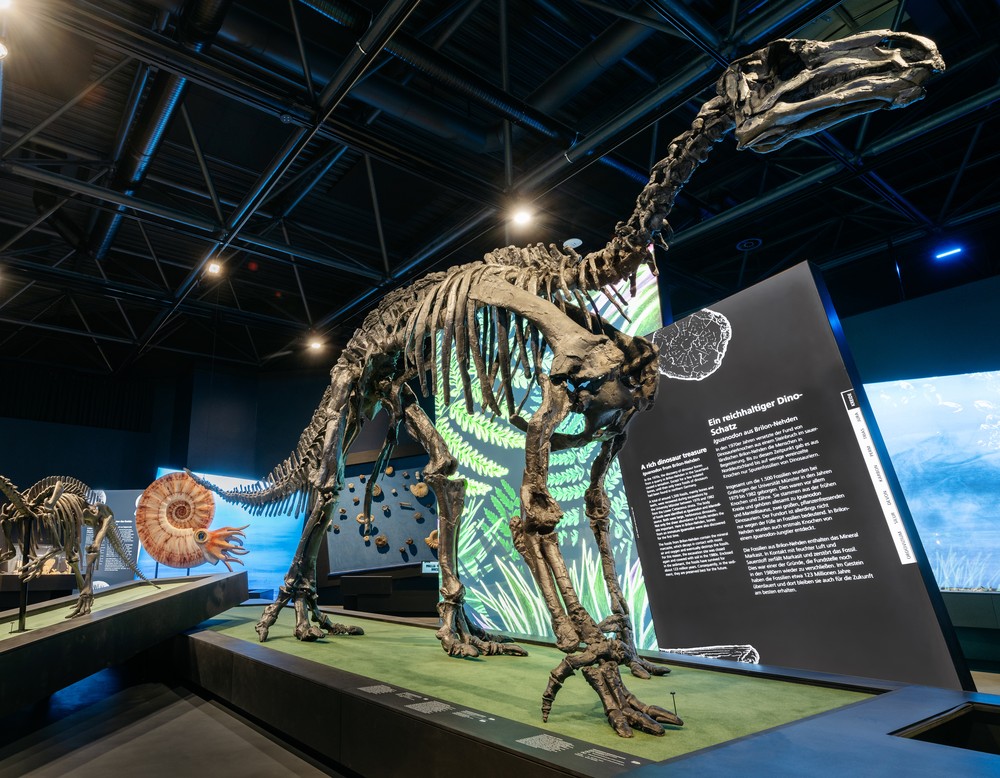
Skeleton of an Iguanodon.
Switch to simple language.
Activate audio support.
A video will open up presenting the text in sign language.
Westphalia’s fossilised treasures.
Switch to simple language.
Activate audio support.
A video will open up presenting the text in sign language.
Reconstruction of a Devonian reef.
Switch to simple language.
Activate audio support.
A video will open up presenting the text in sign language.
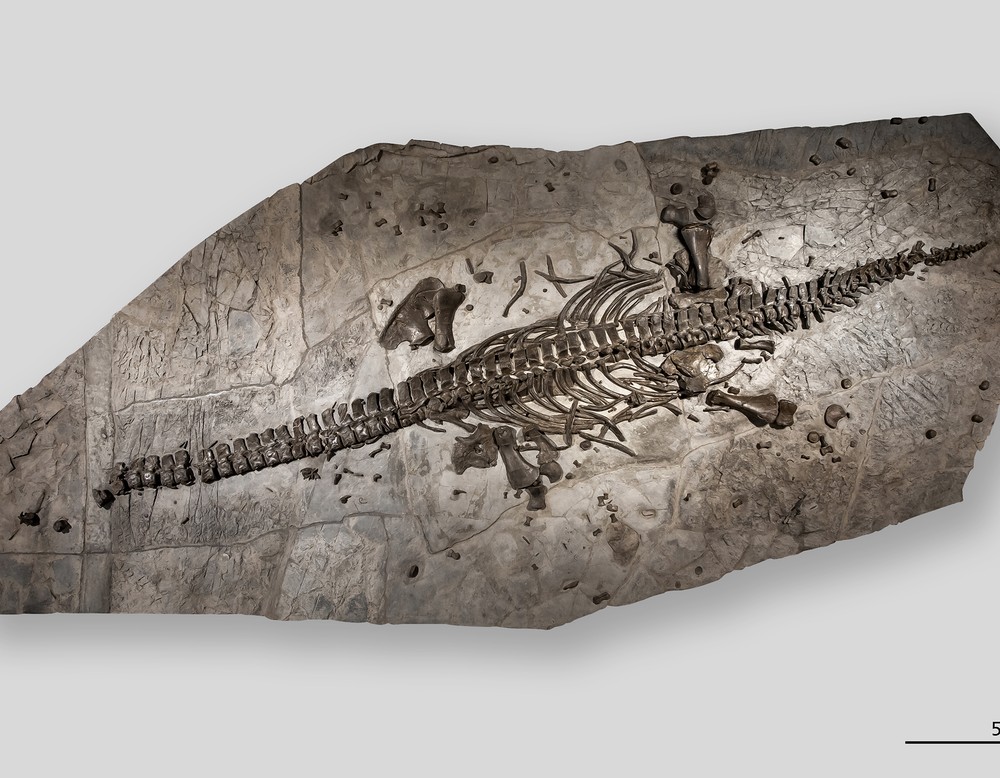
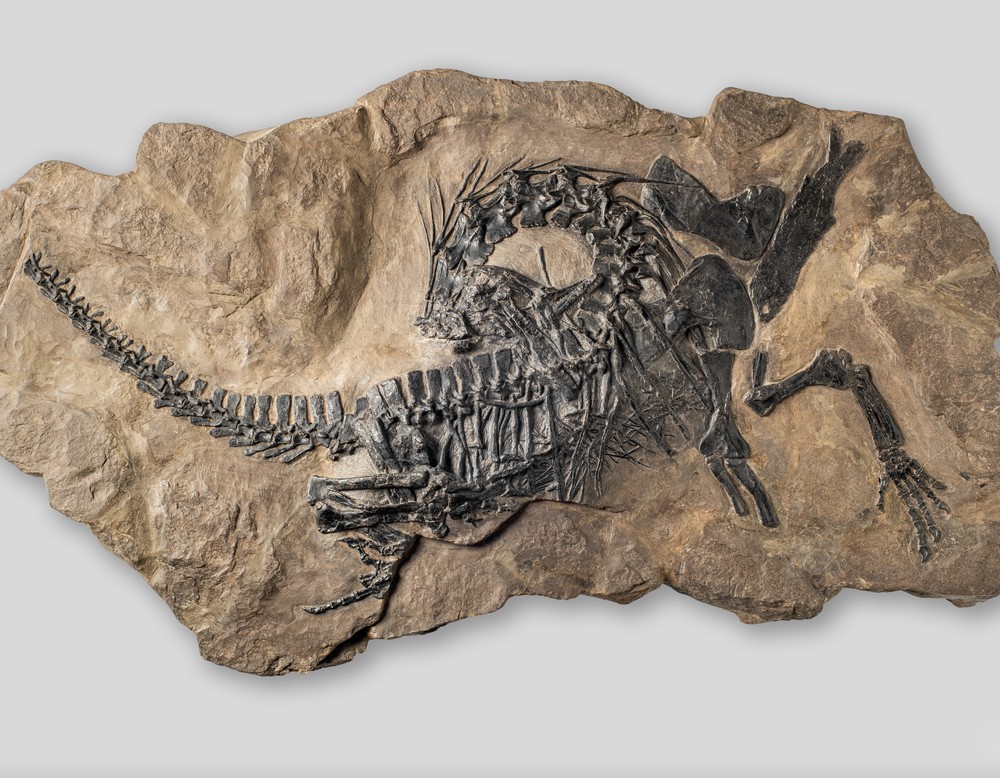
Skeleton of a Protorosaurus.
Switch to simple language.
Activate audio support.
A video will open up presenting the text in sign language.
Westphaliasaurus im Paläoaquarium.
Switch to simple language.
Activate audio support.
A video will open up presenting the text in sign language.
Information about the image
Photo: LWL/Steinweg
Information about the image
Photo: LWL/Steinweg
Information about the image
Photo: LWL/Steinweg
Information about the image
Photo: LWL/Steinweg
Information about the image
Photo: LWL/Steinweg
Information about the image
Photo: LWL/Steinweg
Information about the image
Photo: LWL/Steinweg
Information about the image
Photo: LWL/Steinweg
Information about the image
Photo: LWL/Steinweg
Information about the image
Westphaliasaurus im Paläoaquarium.
Grafik: Die Infografen.
One state. Three museums. Millions of years of Earth’s history
Dinosaurs – Primeval Seas – Ice Age: Experience worlds of the past
Mammoths in Essen, dinosaurs in Münster and marine mammals in Detmold: from April 2026 to September 2027, three exhibitions will show how life has changed over millions of years. The Paläontologische Landesausstellung Nordrhein-Westfalen is a joint project of the Ruhr Museum, the LWL-Museum für Naturkunde and the Lippisches Landesmuseum Detmold, initiated and sponsored by the Ministerium für Heimat, Kommunales, Bau und Digitales des Landes Nordrhein-Westfalen. Each exhibition is dedicated to a geological epoch – always with a focus on "survival": survival in different geological eras and the diversity of plants, animals and humans. Over the course of 485 million years, North Rhine-Westphalia has been constantly changing over the course of 485 million years – covered by the sea, shaped by mountains, swamps and river landscapes. The state exhibition brings this diversity to life in a scientifically sound, multimedia format that is accessible to all.
A video will open up presenting the text in sign language.
Supported by...
The project “About Life among Dinosaurs and Giant Lycopsids” is funded by the LWL-Kulturstiftung. It forms part of the cultural programme marking the “1250 Years of Westphalia” anniversary, which was celebrated in 2025 under the patronage of Federal President Frank-Walter Steinmeier and will continue to have an impact well into 2026.
A cookie is text information that the visited website places on the viewer’s (‘client’) computer through the web browser.
The cookie is either sent to the browser by the web server or generated by a script (possibly JavaScript) in the website.
The client sends the cookie information to the server again with every request on later new visits to this site.
To offer you a more pleasant experience, we use cookies to save your language settings, for example,
or to collect anonymous statistical data that we can use to optimise the user experience/ergonomics on our online services.
Listed below, you’ll see cookies divided into categories; you can select or deselect categories by using Opt-in.
These cookies and services are necessary for you to visit our online services and use their features.
Without them, you cannot use services, such as login (sessions), language settings,
shopping cart and privacy settings, as well as services related to security.
Except for login (sessions), no information of a sensitive nature that can be used to identify you will be collected.
Mandatory Cookies
These cookies are needed for normal functioning of the website.
django_language
Bestimmt die bevorzugte Sprache des Besuchers. Ermöglicht der Webseite, beim erneuten Besuch des Besuchers die bevorzugte Sprache festzulegen.
Lifetime: 1 Jahr
csrftoken
Hilft, Cross-Site Request Forgery- (CSRF-) Angriffe zu verhindern.
Lifetime: 1 Jahr
Facebook Pixel
These cookies and services collect information about how you use our online services,
such as which functions and pages you use most often. This data can help us optimise our online services,
for example, or simplify navigation. They are also used to inform partners whether you reached our
website through a partner site, and whether your visit led to using one of our offers; however,
no information will be recorded that can be used to personally identify you.
Statistics Cookies
These cookies are used for collecting usage statistics of the website.
_pk_ses*
Wird von Piwik Analytics Platform genutzt, um Seitenabrufe des Besuchers während der Sitzung nach zu verfolgen.
Lifetime: 1 Tag
Domain: https://piwik.lwl.org/piwik/piwik.js
_pk_ref.*
Speicherung der ID der Herkunftsseite (referrer ID)
Lifetime: 6 Monate
Domain: https://piwik.lwl.org/piwik/piwik.js
Youtube Videos
These cookies and services allow the usage of youtube videos on the website.
PREF
Dieses cookie speichert Ihre Präferenzen und andere Informationen, insbesondere bevorzugte Sprache, wie viele Suchergebnisse auf Ihrer Seite angezeigt werden sollen und ob Sie den SafeSearch-Filter von Google aktivieren möchten oder nicht.
Lifetime: 2 Jahre
Domain: .youtube.com
CONSENT
Lifetime: 6 MONATE
Domain: .youtube.com
VISITOR_INFO1_LIVE
Hierbei handelt es sich um ein Cookie, das YouTube setzt, um die Bandbreite des Nutzers zu berechnen.
Lifetime: 6 Monate
Domain: .youtube.com
YSC
Registriert eine eindeutige ID, um Statistiken der Videos von YouTube, die der Benutzer gesehen hat, zu behalten.